


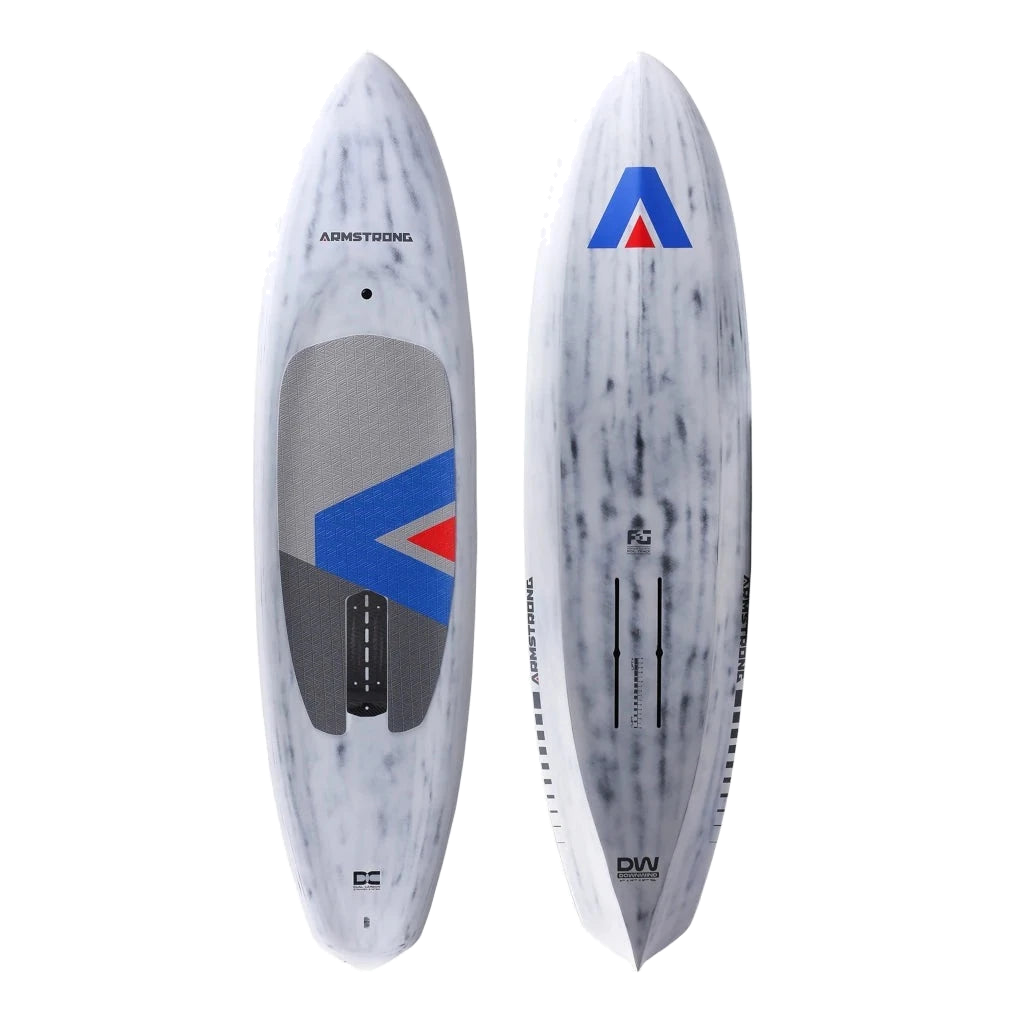


Wing Foil Boards
Picking a wing foil board mostly comes down to two numbers: volume and width. Higher volume = more float, Wider board = more stability and together, these provide an easier learning curve. Longer and narrower boards, gain speed faster and engage the foil earlier than wider and shorter boards, which comes into play more in Parawinging, SUP foiling and downwind specific disciplines.
We've got the best boards from Duotone, Armstrong and Omen in stock. From big learner boards and inflatables to small sinkers and long downwinders. (Fanatic boards are Duotone now, FYI. They're all on the Duotone wing foil boards page.)
How big a board do I need?
Start with your weight in kg and add liters:
- Learning: your weight plus 20 to 40 L. A 75 kg rider lands around 95 to 115 L. You'll be kneeling, standing up and falling off a lot, and the extra float means less swimming. If you have watersports background aim closer to the +20 number, whereas if you have no watersports background aim closer to the +40 number.
- Going upwind and starting to carve: your weight plus 5 to 20 L.
- Advanced: about your weight in litres, or a bit under.
- Sinkers: 20 to 30 L under your weight. They won't float you standing still, so you need a deep-water start and steady wind. They're great in waves, but not a board to learn on.
- Downwind and parawing: shape matters more than volume. Long and narrow is what paddles you up onto the foil. If you'll wing the same board too, go a bit shorter.
These are starting points, not rules. Send us your weight, how long you've been riding and where you ride, and we'll tell you which board we'd put you on.
Looking for a deal? See wing foil boards on sale. Kite, wake and prone boards are under all foil boards.